May 2026 Lecturer's Report
St. Isidore
By Bob Walz, Lecturer for the Council.
Hero image: Saint Isidore the Farmer, 18th century anonymous painting, via Wikimedia Commons.
Early Life
St. Isidore, commonly known as Isidore the Laborer, was born in Madrid, Spain somewhere around 1070 or 1082, good records were not a priority in those days, to poor, devout parents.

He was christened Isidore after the name of their patron, St. Isidore of Seville. In 1083 or 1085, the troops of Alfonso VI of Leon and Castile conquered Madrid from the Muslims in Toledo. Isidore spent his life as a hired hand in the service of a wealthy landowner in Madrid, Juan de Vargas, on a farm near the city. He shared what he had, even his meals, with the poor. Juan de Vargas would later make him bailiff of his entire estate of Lower Caramanca.
Isidore married Maria Torribia, known as Santa Maria de la Cabeza in Spain; she has never been canonized. Isidore and Maria had one son. On one occasion, their son fell into a deep well, and at the prayers of his parents, the water of the well is said to have risen miraculously to the level of the ground, bringing the child with it. In thanksgiving, Isidore and Maria then vowed sexual abstinence and lived in separate houses. Their son later died in his youth.
May 15
Traditional liturgical feast of Saint Isidore.
438
Miracles have been attributed to him.
1622
Canonized with Ignatius of Loyola, Francis Xavier, Teresa of Avila and Philip Neri.
Miracles
In the morning before going to work, Isidore would usually attend Mass at one of the churches in Madrid. One day, his fellow farm workers complained to their master that Isidore was always late for work in the morning. Upon investigation the master found Isidore at prayer while an angel was doing the ploughing for him.
On another occasion, his master saw an angel ploughing on either side of him, so that Isidore's work was equal to that of three of his fellow field workers. Isidore is also said to have brought back to life his master's deceased daughter, and to have caused a fountain of fresh water to burst from the dry earth to quench his master's thirst.
One snowy day, when going to the mill with wheat to be ground, he passed a flock of pigeons scratching for food on the hard surface of the frosty ground. Taking pity on the poor animals, he poured half of his sack of precious wheat upon the ground for the birds. When he reached the mill, however, the bag was full, and the wheat, when it was ground, produced double the expected amount of flour.
Isidore's wife, Maria, always kept a pot of stew on the fireplace in their humble home as Isidore would often bring home anyone who was hungry. One day he brought home more hungry people than usual. After she served many of them, Maria told him that there simply was no more stew in the pot. He insisted that she check the pot again, and she was able to spoon out enough stew to feed them all.
He shared what he had, even his meals, with the poor.
Relics and Recognition
On 2 April 1212, after torrential rains had exhumed cadavers from cemeteries in Madrid, his body was discovered in an apparent state of incorruptibility.
He is said to have appeared to Alfonso VIII of Castile, and to have shown him the hidden path by which he surprised the Moors and gained the victory of Las Navas de Tolosa, in 1212. When King Philip III of Spain was cured of a deadly disease after touching the relics of the saint, the king replaced the old reliquary with a costly silver one and instigated the process of his beatification. Throughout history, other members of the royal family would seek curative powers from Saint Isidore.
The number of miracles attributed to him has been counted as 438. The only original source of hagiography, a biography of saints or venerated persons, on him is a fourteenth century codex, the historical format of a modern book, called Codice de Juan Diacono which relates five of his miracles:
- The pigeons and the grain.
- The angels ploughing.
- The saving of his donkey, through prayer, from a wolf attack.
- The account of his wife's pot of food.
- A similar account of his feeding the brotherhood.
The codex also attests to the incorruptible state of his body, stating it was exhumed 40 years after his death.

Beatification and Canonization
Isidore was beatified in Rome on May 2, 1619, by Pope Paul V, and then canonized along with Saints Ignatius of Loyola, Francis Xavier, Teresa of Avila and Philip Neri, on March 12, 1622. The Bull of Beatification was published March 12, 1621, by Pope Gregory XV. The Bull of Canonization was published by Benedict XIII on June 4, 1725.
A bull of beatification is an official document issued by the pope that declares a person "Blessed," or "Saint" allowing for public veneration. This document typically follows a thorough investigation of the individual's life and miracles attributed to them.
In 1696, his relics were moved to the Royal Alcazar of Madrid to intervene on behalf of the health of Charles II of Spain. While there, the King's locksmith pulled a tooth from the body and gave it to the monarch, who slept with it under his pillow until his death. This was not the first, nor the last time his body was allegedly mutilated out of religious fervor. For example, it was reported one of the ladies in the court of Isabella I of Castile bit off one of his toes.
In 1760, his body was brought to the Royal Palace of Madrid during the illness of Maria Amalia of Saxony.
In 1769, King Charles III of Spain had the remains of Saint Isidore and his wife Maria relocated to the San Isidro Church, Madrid. The sepulcher has nine locks and only the King of Spain has the master key. The opening of the sepulcher must be performed by the Archbishop of Madrid and authorized by the King himself. It has not been reopened since 2022.
Patronage and Devotion
Saint Isidore is widely venerated as the patron saint of farmers, peasants, day laborers and agriculture in general, as well as brick layers. His hometown of Madrid, the Spanish cities of Leon, Zaragoza, and Seville, and various locales in the former Spanish Empire honor him as their patron saint. The US National Catholic Rural Life Conference claims him as its patron. San Ysidro, California, and San Ysidro, New Mexico, were named after him.
Saint Isidore is often portrayed as a peasant holding a sickle and a sheaf of corn. He might also be shown with a sickle and staff; as an angel plows for him; or with an angel and white oxen near him. In Spanish art, his emblems are a spade or a plough.
The house of his master, Juan de Vargas, in Madrid is now a museum, popularly known as the "Casa de San Isidro". It houses temporary exhibitions on the history of Madrid, as well as on the life of the saint. Not only does this museum contain a chapel built upon the place where Isidore lived and died, but also the well where his son fell and was saved.
His life and miracles have inspired paintings, a poem by Lope de Vega, music and a 1964 film Isidro, labrador by Rafael J. Salvia. Javier Escriva played the role of the saint.
Feast Day and Celebrations
The date of his liturgical feast, which, though not included in the General Roman Calendar, has been celebrated for centuries in several countries and dioceses, is May 15. Many towns venerate Saint Isidore and his wife Blessed Maria Torribia with processions in which the fields are blessed.
One of the most celebrated holidays of Madrid is held on May 15, the liturgical feast of St. Isidore who is the city's patron saint, as well as of farmers. The traditional festival is held in an open-air area known as the Pradera del Santo. In the afternoon, the images of San Isidro and his wife, Santa Maria de la Cabeza, are paraded through the streets, from Calle del Sacramento to the Plaza de la Villa, passing through Calle del Cordon.
The feast in honor of San Isidro is declared of National Tourist Interest in Andalusia and is one of the most important celebrations in province of Malaga. The fiesta is very popular in Alameda because San Isidro is a co-patron of the town.
Celebrations honoring Saint Isidore are also held elsewhere in Spain. For years, the Alicantine locality of Castalla has been celebrating the Fair of San Isidro, where numerous companies display their products in a playful and festive atmosphere.
In Chile in South America, May 15 is San Isidro Day in Cuz-Cuz, in the Coquimbo region of Chile. If the day falls on a Monday, the following Sunday is celebrated. Celebrations begin at noon with a Mass, followed by a procession and Chilean dances.
In San Isidro, Matagalpa, Nicaragua, the town celebrates its patron saint from May 1 through May 15.
In Peru, the residents of San Isidro de Carampa of Ayacucho in the city of Lima celebrate a San Isidro festival. The First Society of San Isidro de Carampa organizes the festival, along with the Butler and the Adornante festivals. In the evening, after the celebration of the Mass, a procession moves to the house of the Adornante. On the next day, Central Day, another Mass is said. Another procession is held, followed by a festival.
In the Philippines, many festivals are held in honor of Saint Isidore on or around May 15, which is mostly agricultural and a predominantly Catholic country.
Calendar Notes
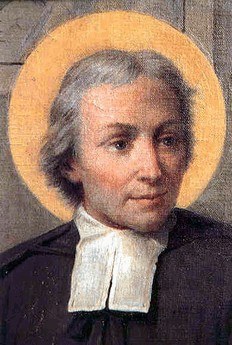
In 1947, at the request of the National Catholic Rural Life Conference, he was officially named patron of farmers. When St Isidore's feast was first inserted into the calendar for the United States in the year 1947, the feast day of Saint John Baptist de La Salle was still being celebrated on May 15, with the result that the celebration of his feast was assigned to March 22, with a proper Mass. Following the promulgation of the 1960 Code of Rubrics by St. Pope John Paul II, St. Isidore's feast was transferred to October 25 in the United States.
With the 1969 revision of the General Roman Calendar, the memorial of Saint John Baptist de la Salle was moved to his day of death, April 7, and Saint Isidore's was restored to May 15 that now keeps it in line with the rest of the world.
Final Reflection
St. Isidore is an important saint who is celebrated throughout the world as an important figure in the Roman Catholic Church. I was not aware of his importance to so many people in so many countries with cities named after him and annual celebrations honoring his life's work.