September 2026 Lecturer's Report
Sumela Monastery
A cliffside monastery in Turkey, a treasured icon of the Theotokos, and a history stretching from the Byzantine Empire to modern restoration.
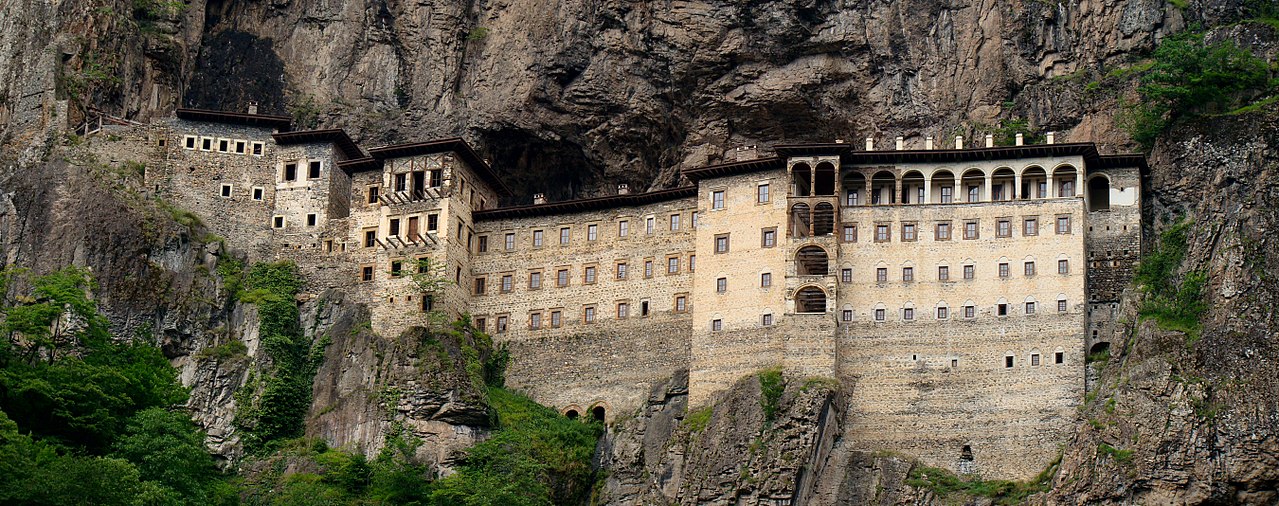
Sumela Monastery, known as the Monastery of the Virgin Mary, is located in the Pontic Mountains in Turkey. The monastery is situated on a steep cliff at an elevation of approximately 3900 feet above sea level.

The exact date when the monastery was founded is unknown, but the Turkish Ministry of Tourism estimates the date to be around AD386. That would place the founding during the reign of the emperor Theodosius. Theodosius was initially the Emperor of the Eastern Roman Empire but later became the emperor of the entire, Eastern and Western, Roman Empire.
A bit more about Theodosius, he was a devout Nicene Christian, opposing Arianism, which denied the consubstantiality of the Son with the Father. He convened the First Council of Constantinople in 381 AD, which reaffirmed the Nicene Creed and condemned Arianism as heretical.
According to the Turkish Ministry of Tourism, two Athenian monks named Barnabas and Sophronios founded the monastery. It became famous for an icon of the Theotokos known as the Panagia Gorgoepekoos, said to have been painted by the Apostle and Gospel writer, St. Luke. The translation is "She who is quick to hear" or "Who grants requests quickly" and refers to the Virgin Mary, the name sake of the monastery.
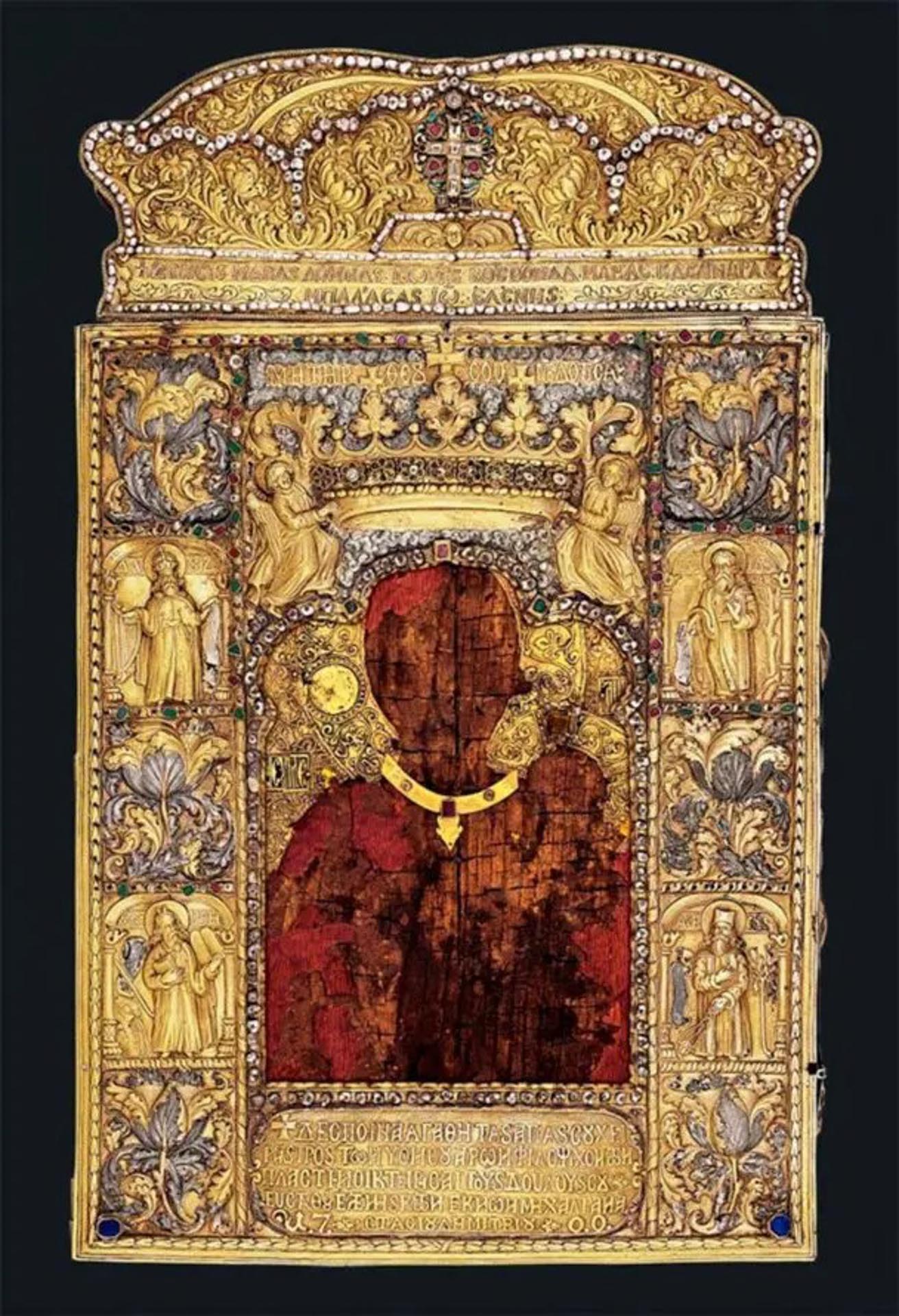
Imagine having that painting in our Church.


3900 ft.The monastery sits on a steep cliff above sea level.
AD386The Turkish Ministry of Tourism estimates the monastery's founding around this date.
Aug. 15A divine liturgy is held yearly with a special pass required.
A Monastery Restored Through the Centuries
During its long history, the monastery fell into ruin several times and was restored by various emperors. During the 6th century AD, it was restored and enlarged by the Byzantine general Belisarius at the behest of emperor Justinian.
It reached its present form in the 13th century, after gaining prominence during the existence of the Empire of Trebizond. The Empire of Trebizond was one of the three Byzantine rump states of the Byzantine Empire that existed during the 13th through to the 15th century. The empire consisted of the Pontus, or far northeastern corner of Anatolia, and portions of southern Crimea.


While the emperors Basil and John II had endowed the monastery richly, it was during the reign of Alexios III from 1349 to 1390 that Sumela received its most important largesse. According to legend, the young Alexios was saved from a storm by the Theotokos. Theotokos is a traditional title for Mary, the mother of Jesus. It translates to "God-bearer", "birth-giver to God", or "Mother of God". The term is widely used in Eastern Orthodox, Coptic, and Roman Catholic traditions to affirm that Jesus is fully God from the moment of his conception. Alexios was bidden by her to restore the monastery. A chrysobull, an official medieval document issued by Byzantine emperors and other Eastern European rulers, dated to 1365, confirms the freedom and autonomy of the monastery, together with all of its hereditary lands and dependents; exempts them from all taxes, except for one biannual tax; and likewise exempts any serfs settling on that land, listing 40 serfs by name. At that time, the monastery was granted an amount annually from imperial funds. During the time of Manuel III, son of Alexios III, and during the reigns of subsequent princes, Sumela gained further wealth from imperial grants.
Ottoman Protection and Pilgrimage
Following the conquest of Trebizond by Ottoman Sultan Mehmed II in 1461, the monastery was granted the sultan's protection and given rights and privileges that were renewed by following sultans. The monastery remained a popular destination for monks and travelers through the years.
So much history took place during the early part of the 1900s. Until the end of 1918, the Sumela Monastery was active and was visited by monks and Christian and Muslim pilgrims. In 1923, the Ottoman Empire collapsed and after the National War of Liberation, an independent Turkish Republic was founded by Ataturk. After 1923, the Sumela Monastery was abandoned following the population exchange between Greece and Turkey as laid down in the Treaty of Lausanne. In 1930, those who migrated founded a new monastery which they named as the new Panagia Sumela Monastery on the slopes of Mount Vermion, near the village of Kastania near Veria, in Macedonia, Greece. Some treasures from the old Sumela Monastery were carried to the new one in Greece. Macedonia was part of Greece. The forced population exchange involved over 1,000,000 people that were moved from Greece to Turkey and from Turkey to Greece.
In 1930, the wooden parts of the Sumela Monastery were destroyed by fire and in the years following other parts of the monastery were damaged and pillaged by treasure hunters.
Restoration and Return
As of May 25, 2019, the Sumela Monastery is a museum open to visitors. Restoration work is funded by the Government of Turkey. As of 2012, the Turkish government is funding reconstruction work, and the monastery is enjoying a revival in pilgrimage from Greece, Georgia and Russia. The monastery's primary function is as a tourist attraction. It overlooks forests and streams, making it popular for its aesthetics as well as its cultural and religious significance.
A divine liturgy is held on August 15 of every year since 2010. A special pass issued by the Ecumenical Patriarchate of Constantinople is required to visit on that day of the Dormition of the Theotokos or Feast of the Assumption. Only 450 to 500 visitors are allowed inside the monastery on that day.